Buy neolithique.eu ?
We are moving the project
neolithique.eu .
Are you interested in purchasing the domain
neolithique.eu ?
domain@kv-gmbh.de · 0541-91531010
Buy neolithique.eu ?
What does cu mean?
Cu is the chemical symbol for the element copper. It is a transition metal with a reddish-orange color and is known for its high thermal and electrical conductivity. Copper is commonly used in electrical wiring, plumbing, and as a component in various alloys. **
Why is the formula for copper nitrate Cu(NO3)2 and not Cu(NO3)3?
The formula for copper nitrate is Cu(NO3)2 because copper has a +2 oxidation state, meaning it can form a compound with two nitrate ions. Each nitrate ion (NO3-) carries a -1 charge, so two nitrate ions are needed to balance the +2 charge of copper. Therefore, the correct formula for copper nitrate is Cu(NO3)2. **


Similar search terms for QUICK-BRAKE-1960-CU
Top-Angebote
Products related to QUICK-BRAKE-1960-CU:
-
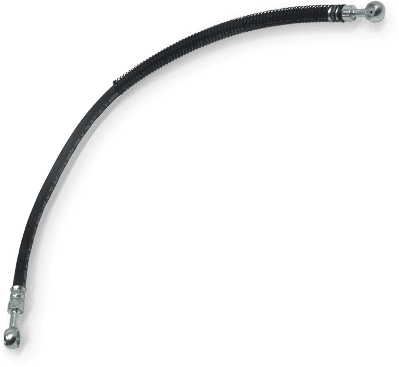
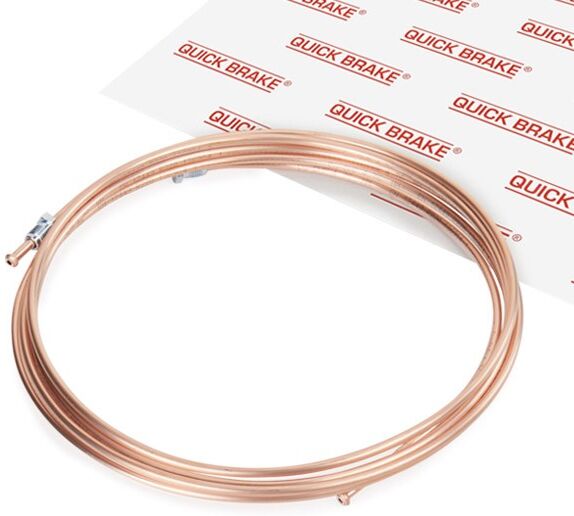
QUICK BRAKE CU-2750A-A Brake linesMaterial: Copper; Transmission Type: Manual Transmission; Construction Year to: 09/1974; Fitting Position: Centre, Centre left, Centre right, Rear, Front; Braking System: for vehicles without brake force regulator, for vehicles with disc brakes on the rear axle, for vehicles with brake force regulator, for vehicles with drum brakes on the rear axle; Construction Year from: 08/1977, 01/1989; Braking/Driving Dynamics: for vehicles without ABS, for vehicles with ABS; Wheelbase [mm]: 2920; Vehicle Identification Number (VIN) to: 6K-TR069 486; Number of Doors: 512,49 £*Shipping: 8,45 £Secure redirect to the provider
-
QUICK BRAKE CU-2300A-A Brake linesMaterial: Copper; Single/Dual Circuit Brake System: 2-circuit brake system; Braking System: for vehicles with brake booster, for vehicles with disc brakes on the front axle, for vehicles with brake force regulator, for vehicles without brake booster, for vehicles with drum brake at the front and rear axle, for vehicles without brake force regulator, for vehicles with drum brakes on the rear axle, for vehicles with disc brakes on the rear axle; Fitting Position: Centre, Rear, Centre right, Front, Centre left, Right Front; Vehicle type: 60/100/115/125; Construction Year from: 06/1976; Brake Caliper Type: Brake Caliper (2 pistons); Construction Year to: 10/1976, 12/1991; Vehicle Identification Number (VIN) to: 17A 0011705, 70-T-199999; Wheelbase: short wheelbase, long wheelbase; Braking/Driving Dynamics: for vehicles without ABS, for vehicles with ABS; Wheelbase [mm]: 2920, 3320, 3620; Vehicle Identification Number (VIN) from: 70-T-200001; for RPO number up to: 0751010,99 £*Shipping: 8,45 £Secure redirect to the provider
-
QUICK BRAKE CU-2500A-A Brake linesMaterial: Copper; Braking System: for vehicles without brake force regulator, for vehicles with brake force regulator, for vehicles without brake booster, for vehicles with brake booster, for vehicles with drum brakes on the rear axle, for vehicles with disc brakes on the rear axle; Fitting Position: Centre, Rear, Centre right, Centre left, Right Front; Construction Year from: 11/1976, 08/1984, 12/1989, 08/1991; Vehicle Identification Number (VIN) from: 17A 0011706, P718187, R000001; Braking/Driving Dynamics: for vehicles without ABS, for vehicles with ABS; Construction Year to: 09/1974, 07/1991, 09/1993, 12/1977; Vehicle type: LT28, LT31, LT35; Wheelbase [mm]: 2500, 3550; Tyres: for single tyres, for dual tyres; Vehicle Identification Number (VIN) to: P71818611,99 £*Shipping: 8,45 £Secure redirect to the provider
-
QUICK BRAKE CU-3300A-A Brake linesMaterial: Copper; Construction Year from: 10/1974, 06/1982, 01/1986; Fitting Position: Centre, Rear, Centre right, Centre left, Right Rear, Left Rear; Braking/Driving Dynamics: for vehicles without ABS, for vehicles with ABS; Construction Year to: 05/1982, 12/1985, 09/1974; Braking System: for vehicles with brake force regulator, for vehicles with drum brakes on the rear axle, for vehicles with disc brakes on the rear axle, for vehicles with brake booster, for vehicles without brake force regulator; Vehicle Identification Number (VIN) from: 44-G-073363, 44-J-200100; Vehicle Identification Number (VIN) to: 44-J-200099, 44-K-150000; Vehicle Equipment: for vehicles without power steering; Wheelbase: long wheelbase11,49 £*Shipping: 8,45 £Secure redirect to the provider


-
What is produced from FeSO4 and Cu?
When FeSO4 (iron(II) sulfate) and Cu (copper) are combined, a displacement reaction occurs. The iron(II) ion in FeSO4 is more reactive than the copper ion, so the iron(II) ion displaces the copper ion in the compound. As a result, copper metal is produced while iron(II) sulfate is left behind in the solution. The balanced chemical equation for this reaction is: FeSO4 + Cu → CuSO4 + Fe. **
-
What does 2 cu of chemistry mean?
2 cu of chemistry typically refers to 2 cubic units of a chemical substance or solution. This measurement is used to quantify the volume of a chemical that is being used in a reaction or experiment. It is important to accurately measure and use the correct amount of chemicals in order to achieve the desired results and ensure safety in the laboratory. **
-
How do I know the charge of Cu?
The charge of copper (Cu) can be determined by looking at its position on the periodic table. Copper is a transition metal with multiple oxidation states, commonly +1 or +2. The most common oxidation state of copper is +2, but it can also exist in the +1 oxidation state in certain compounds. To determine the specific charge of copper in a compound, you would need to consider the overall charge of the compound and the known charges of the other elements present. **
-
What is the redox reaction for Cu + O2?
The redox reaction for Cu + O2 is: 2Cu + O2 -> 2CuO In this reaction, copper (Cu) is oxidized from its elemental state to form copper oxide (CuO), while oxygen (O2) is reduced from its elemental state to form copper oxide (CuO). This is a classic example of a redox reaction, where oxidation and reduction occur simultaneously. **

How was school in the year 1960?
School in the year 1960 was quite different from today. Classrooms were typically more structured, with a focus on rote memorization and teacher-led instruction. Technology was minimal, with chalkboards and textbooks being the primary tools used for learning. Discipline was often strict, and students were expected to show respect and obedience to their teachers. Despite these differences, education in 1960 was still valued as a means to achieve success and opportunities in the future. **
How many Ag atoms are there per Cu atom?
In a pure copper (Cu) crystal lattice, there is one copper atom per lattice point. In a pure silver (Ag) crystal lattice, there is one silver atom per lattice point. Therefore, the ratio of Ag atoms to Cu atoms in a pure Cu-Ag alloy is 1:1. This means that there is one Ag atom for every Cu atom in the alloy. **
Top-Angebote
Products related to QUICK-BRAKE-1960-CU:
-
QUICK BRAKE CU-2750A-A Brake linesMaterial: Copper; Transmission Type: Manual Transmission; Construction Year to: 09/1974; Fitting Position: Centre, Centre left, Centre right, Rear, Front; Braking System: for vehicles without brake force regulator, for vehicles with disc brakes on the rear axle, for vehicles with brake force regulator, for vehicles with drum brakes on the rear axle; Construction Year from: 08/1977, 01/1989; Braking/Driving Dynamics: for vehicles without ABS, for vehicles with ABS; Wheelbase [mm]: 2920; Vehicle Identification Number (VIN) to: 6K-TR069 486; Number of Doors: 512,49 £*Shipping: 8,45 £Secure redirect to the provider
-
QUICK BRAKE CU-2300A-A Brake linesMaterial: Copper; Single/Dual Circuit Brake System: 2-circuit brake system; Braking System: for vehicles with brake booster, for vehicles with disc brakes on the front axle, for vehicles with brake force regulator, for vehicles without brake booster, for vehicles with drum brake at the front and rear axle, for vehicles without brake force regulator, for vehicles with drum brakes on the rear axle, for vehicles with disc brakes on the rear axle; Fitting Position: Centre, Rear, Centre right, Front, Centre left, Right Front; Vehicle type: 60/100/115/125; Construction Year from: 06/1976; Brake Caliper Type: Brake Caliper (2 pistons); Construction Year to: 10/1976, 12/1991; Vehicle Identification Number (VIN) to: 17A 0011705, 70-T-199999; Wheelbase: short wheelbase, long wheelbase; Braking/Driving Dynamics: for vehicles without ABS, for vehicles with ABS; Wheelbase [mm]: 2920, 3320, 3620; Vehicle Identification Number (VIN) from: 70-T-200001; for RPO number up to: 0751010,99 £*Shipping: 8,45 £Secure redirect to the provider
-
What does cu mean?
Cu is the chemical symbol for the element copper. It is a transition metal with a reddish-orange color and is known for its high thermal and electrical conductivity. Copper is commonly used in electrical wiring, plumbing, and as a component in various alloys. **
-
Why is the formula for copper nitrate Cu(NO3)2 and not Cu(NO3)3?
The formula for copper nitrate is Cu(NO3)2 because copper has a +2 oxidation state, meaning it can form a compound with two nitrate ions. Each nitrate ion (NO3-) carries a -1 charge, so two nitrate ions are needed to balance the +2 charge of copper. Therefore, the correct formula for copper nitrate is Cu(NO3)2. **
-
What is produced from FeSO4 and Cu?
When FeSO4 (iron(II) sulfate) and Cu (copper) are combined, a displacement reaction occurs. The iron(II) ion in FeSO4 is more reactive than the copper ion, so the iron(II) ion displaces the copper ion in the compound. As a result, copper metal is produced while iron(II) sulfate is left behind in the solution. The balanced chemical equation for this reaction is: FeSO4 + Cu → CuSO4 + Fe. **
-
What does 2 cu of chemistry mean?
2 cu of chemistry typically refers to 2 cubic units of a chemical substance or solution. This measurement is used to quantify the volume of a chemical that is being used in a reaction or experiment. It is important to accurately measure and use the correct amount of chemicals in order to achieve the desired results and ensure safety in the laboratory. **
Similar search terms for QUICK-BRAKE-1960-CU
-
QUICK BRAKE CU-2500A-A Brake linesMaterial: Copper; Braking System: for vehicles without brake force regulator, for vehicles with brake force regulator, for vehicles without brake booster, for vehicles with brake booster, for vehicles with drum brakes on the rear axle, for vehicles with disc brakes on the rear axle; Fitting Position: Centre, Rear, Centre right, Centre left, Right Front; Construction Year from: 11/1976, 08/1984, 12/1989, 08/1991; Vehicle Identification Number (VIN) from: 17A 0011706, P718187, R000001; Braking/Driving Dynamics: for vehicles without ABS, for vehicles with ABS; Construction Year to: 09/1974, 07/1991, 09/1993, 12/1977; Vehicle type: LT28, LT31, LT35; Wheelbase [mm]: 2500, 3550; Tyres: for single tyres, for dual tyres; Vehicle Identification Number (VIN) to: P71818611,99 £*Shipping: 8,45 £Secure redirect to the provider
-
QUICK BRAKE CU-3300A-A Brake linesMaterial: Copper; Construction Year from: 10/1974, 06/1982, 01/1986; Fitting Position: Centre, Rear, Centre right, Centre left, Right Rear, Left Rear; Braking/Driving Dynamics: for vehicles without ABS, for vehicles with ABS; Construction Year to: 05/1982, 12/1985, 09/1974; Braking System: for vehicles with brake force regulator, for vehicles with drum brakes on the rear axle, for vehicles with disc brakes on the rear axle, for vehicles with brake booster, for vehicles without brake force regulator; Vehicle Identification Number (VIN) from: 44-G-073363, 44-J-200100; Vehicle Identification Number (VIN) to: 44-J-200099, 44-K-150000; Vehicle Equipment: for vehicles without power steering; Wheelbase: long wheelbase11,49 £*Shipping: 8,45 £Secure redirect to the provider
-
QUICK BRAKE CU-2700A-A Brake linesMaterial: Copper; Braking/Driving Dynamics: for vehicles with ABS, for vehicles without ABS; Fitting Position: Centre, Rear, Right Front, Centre right, Centre left, Front, Right Rear; Vehicle Identification Number (VIN) to: 179755, A476019, 6K-TR069 486; Vehicle Identification Number (VIN) from: 179756, A060862; Construction Year to: 08/1989, 09/1974, 12/1988; Braking System: for vehicles without brake booster, for vehicles with brake force regulator, for vehicles with disc brakes on the rear axle, for vehicles without brake force regulator, for vehicles with drum brakes on the rear axle, for vehicles with brake booster; Construction Year from: 10/1974, 08/1977, 01/1977, 04/2007; Transmission Type: Automatic Transmission; Number of Doors: 3-phase, 5; VET Number to: 367396; VET Number from: 36739712,49 £*Shipping: 8,45 £Secure redirect to the provider
-
QUICK BRAKE CU-1860A-A Brake linesMaterial: Copper; Braking/Driving Dynamics: for vehicles with ABS, for vehicles without ABS, for vehicles without ASR, for vehicles with ASR, for vehicles without EDS, for vehicles without ESP; Construction Year from: 06/1982, 08/1984, 01/1993, 07/1996; Fitting Position: Right Front, Left Rear, Centre, Rear, Left Front; Braking System: for vehicles with drum brakes on the rear axle, for vehicles with brake force regulator, for vehicles with disc brakes on the rear axle; Vehicle Identification Number (VIN) from: 4A-M-000 001, 4M-00 001, 85-E-000001, 33720, 337000; Vehicle Identification Number (VIN) to: 4A-N-250 000, 81-H-299999, 33719; Construction Year to: 08/1986, 05/200310,99 £*Shipping: 8,45 £Secure redirect to the provider
-
How do I know the charge of Cu?
The charge of copper (Cu) can be determined by looking at its position on the periodic table. Copper is a transition metal with multiple oxidation states, commonly +1 or +2. The most common oxidation state of copper is +2, but it can also exist in the +1 oxidation state in certain compounds. To determine the specific charge of copper in a compound, you would need to consider the overall charge of the compound and the known charges of the other elements present. **
-
What is the redox reaction for Cu + O2?
The redox reaction for Cu + O2 is: 2Cu + O2 -> 2CuO In this reaction, copper (Cu) is oxidized from its elemental state to form copper oxide (CuO), while oxygen (O2) is reduced from its elemental state to form copper oxide (CuO). This is a classic example of a redox reaction, where oxidation and reduction occur simultaneously. **
-
How was school in the year 1960?
School in the year 1960 was quite different from today. Classrooms were typically more structured, with a focus on rote memorization and teacher-led instruction. Technology was minimal, with chalkboards and textbooks being the primary tools used for learning. Discipline was often strict, and students were expected to show respect and obedience to their teachers. Despite these differences, education in 1960 was still valued as a means to achieve success and opportunities in the future. **
-
How many Ag atoms are there per Cu atom?
In a pure copper (Cu) crystal lattice, there is one copper atom per lattice point. In a pure silver (Ag) crystal lattice, there is one silver atom per lattice point. Therefore, the ratio of Ag atoms to Cu atoms in a pure Cu-Ag alloy is 1:1. This means that there is one Ag atom for every Cu atom in the alloy. **
* All prices are inclusive of VAT and, if applicable, plus shipping costs. The offer information is based on the details provided by the respective shop and is updated through automated processes. Real-time updates do not occur, so deviations can occur in individual cases. ** Note: Parts of this content were created by AI.