Buy neolithique.eu ?
We are moving the project
neolithique.eu .
Are you interested in purchasing the domain
neolithique.eu ?
domain@kv-gmbh.de · 0541-91531010
Buy neolithique.eu ?
How can one prove transitivity?
Transitivity can be proven by showing that if A is related to B and B is related to C, then A is related to C. This can be demonstrated through a series of logical steps or by providing concrete examples that illustrate the relationship between the elements. Additionally, one can use a formal proof by assuming the premises of transitivity and deriving the conclusion that follows. Overall, proving transitivity involves establishing a clear and consistent relationship between the elements involved. **
How to check the transitivity of relations?
To check the transitivity of relations, you need to examine all possible combinations of elements in the relation. If for every pair of elements (a, b) and (b, c) in the relation, there is also a relation between (a, c), then the relation is transitive. If there is at least one pair of elements (a, b) and (b, c) where there is a relation, but no relation between (a, c), then the relation is not transitive. By systematically checking all possible combinations, you can determine if a relation is transitive or not. **

Similar search terms for Transitivity
Top-Angebote
Products related to Transitivity:
-
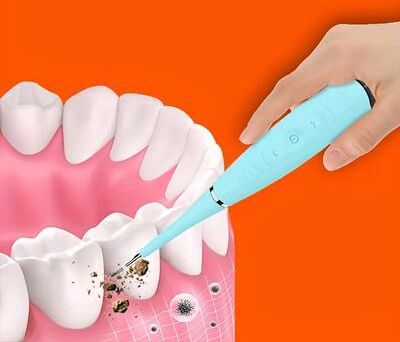
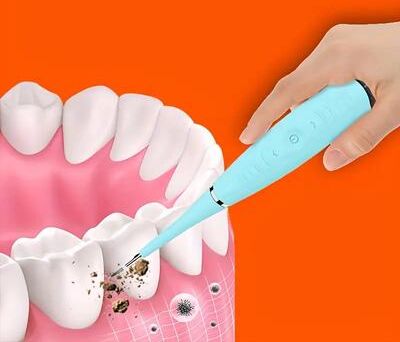
Youfap Market Home Dental Care Tools, Electric Teeth Cleaner, Teeth Stone Remover pinkEffective Teeth Cleaning with Electric Teeth Cleaner This Electric Teeth Cleaner is designed to help you maintain a healthy and bright smile. Its an advanced tool that removes stubborn teeth stones and tartar buildup from the comfort of your own...34,97 $*Shipping: 0,00 $Secure redirect to the provider
-
Healfit Counter Home Dental Care Tools, Electric Teeth Cleaner, Teeth Instrument, Teeth Stone Remover pinkMaintain a healthy, confident smile effortlessly with our Electric Teeth Cleaner, a musthave home dental care tool designed to remove stubborn teeth stones and plaque effectively. Powered by advanced sonic technology, this innovative teeth...21,97 $*Shipping: 0,00 $Secure redirect to the provider
-
LASER TOOLS 4347 Mounting Tools, timing beltfor OE number: OEM 303-376B; Colour: black; Material: Steel; Number of Parts [parts]: 4; Manufactured in: Great Britain; Surface: Phosphatized; Mounting/Removal: for mounting, for removal; TecDoc Engine Number: 10069, 4475, 4464, 23309, 12069, 12070, 15921, 15922, 15923, 15924, 15925, 12074, 15934, 12090, 15994, 16012, 11327, 15919, 12068, 15916, 15917, 15918, 12075, 15892, 12076, 15893, 12077, 15894, 12078, 15895, 18776, 15900, 12080, 15901, 15902, 20854, 12087, 15990, 16010, 18789, 23368, 15935, 15936, 15907, 15908, 15909, 15910, 15911, 18770, 17304, 17305, 17306, 18778, 26945, 31039, 18785, 24464, 18786, 18695, 18692, 18694, 18975, 18976, 17161, 17162, 17159, 17160, 24346, 18503, 18504, 21247, 24345, 18506, 18507, 24347, 18974, 18788, 18787, 18022, 18501, 18502, 18781, 18513, 20039, 24430, 20045, 30734, 23370, 19659, 23308, 24422, 23352, 24434, 20853, 23539, 24410, 23540, 24411, 32760, 32761, 23538, 24412, 24431, 24432, 24423, 24413, 24414, 26929, 29297, 34948, 26946, 29558, 29223, 3443837,49 £*Shipping: 0,00 £Secure redirect to the provider


-
How to test the transitivity of relations?
To test the transitivity of relations, you can use a simple method called the chaining method. This involves taking three elements (a, b, and c) and checking if a is related to b and b is related to c, then a should also be related to c. If this holds true for all possible combinations of elements, then the relation is transitive. Another way to test transitivity is by constructing a matrix representation of the relation and checking if the matrix is transitive. If the matrix satisfies the transitive property, then the relation is transitive. **
-
How to check reflexivity, antisymmetry, and transitivity?
Reflexivity can be checked by verifying if every element in the set relates to itself. Antisymmetry can be checked by ensuring that if (a, b) and (b, a) are in the relation, then a must be equal to b. Transitivity can be checked by confirming that if (a, b) and (b, c) are in the relation, then (a, c) must also be in the relation. These properties can be verified by examining the elements and pairs in the relation and applying the definitions of reflexivity, antisymmetry, and transitivity. **
-
How do you check reflexivity, antisymmetry, and transitivity?
To check reflexivity, we verify if every element in the set relates to itself. For antisymmetry, we confirm that if (a,b) and (b,a) are both in the relation, then a must equal b. Finally, to check transitivity, we ensure that if (a,b) and (b,c) are in the relation, then (a,c) must also be in the relation. These properties are fundamental in determining if a relation is an equivalence relation or a partial order. **
-
What is the difference between transitivity and adjacency?
Transitivity refers to the property of a relation where if A is related to B and B is related to C, then A is also related to C. In other words, it involves the chaining of relationships. Adjacency, on the other hand, refers to the property of being directly next to or connected to something else. In the context of graphs, adjacency refers to the relationship between two nodes that are directly connected by an edge. In summary, transitivity involves the indirect chaining of relationships, while adjacency involves direct connections. **

How do you test the transitivity of relations?
To test the transitivity of relations, you can examine a set of three elements (a, b, c) and check if the relation holds true for each pair of elements. If (a, b) and (b, c) are both in the relation, then you can determine if (a, c) is also in the relation. If the relation holds true for all possible combinations of elements, then it is transitive. This process helps to ensure that the relation follows the property of transitivity. **
Can you do pottery without using any tools?
It is possible to do pottery without using traditional tools, but it would be quite challenging. While tools such as pottery wheels, carving tools, and shaping tools make the process easier and more precise, it is possible to create pottery using only your hands. This method, known as hand-building, involves shaping the clay using just your hands and fingers. It requires a great deal of skill and patience, but it can result in unique and beautiful pottery pieces. **
Top-Angebote
Products related to Transitivity:
-
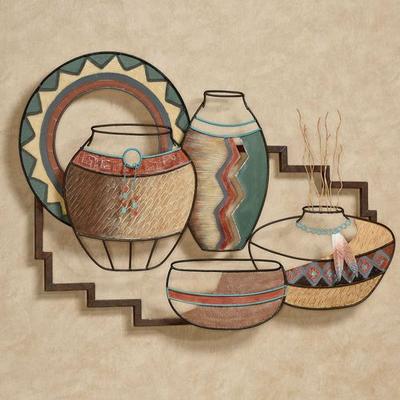
Touch of Class Native Artifacts Wall Sculpture Multi Earth , Multi EarthNative Artifacts, including three vases, a charger, and a bowl, reflect the spirit of the Southwest. This handcrafted Southwest metal wall sculpture, by JasonW Studios (C)2017, has openwork designs, a geometric border, and textured, earth-tone...329,00 $*Shipping: 46,06 $Secure redirect to the provider
-
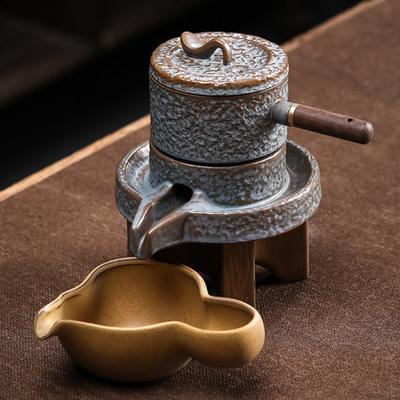
Rare Purchases Rotating Water Teapot, Automatic Stone Mill Pottery Lazy Stone Grinding Tea Set, Tea Maker For Ceremony, Home Office aAutomatic StoneMill Pottery Lazy Stone Grinding Tea Set is the perfect blend of tradition and innovation, designed to enhance your tea experience with elegance and ease. This rotating water teapot and tea maker is not just a functional tool but a...109,97 $*Shipping: 0,00 $Secure redirect to the provider
-
Youfap Market Home Dental Care Tools, Electric Teeth Cleaner, Teeth Stone Remover pinkEffective Teeth Cleaning with Electric Teeth Cleaner This Electric Teeth Cleaner is designed to help you maintain a healthy and bright smile. Its an advanced tool that removes stubborn teeth stones and tartar buildup from the comfort of your own...34,97 $*Shipping: 0,00 $Secure redirect to the provider
-
How can one prove transitivity?
Transitivity can be proven by showing that if A is related to B and B is related to C, then A is related to C. This can be demonstrated through a series of logical steps or by providing concrete examples that illustrate the relationship between the elements. Additionally, one can use a formal proof by assuming the premises of transitivity and deriving the conclusion that follows. Overall, proving transitivity involves establishing a clear and consistent relationship between the elements involved. **
-
How to check the transitivity of relations?
To check the transitivity of relations, you need to examine all possible combinations of elements in the relation. If for every pair of elements (a, b) and (b, c) in the relation, there is also a relation between (a, c), then the relation is transitive. If there is at least one pair of elements (a, b) and (b, c) where there is a relation, but no relation between (a, c), then the relation is not transitive. By systematically checking all possible combinations, you can determine if a relation is transitive or not. **
-
How to test the transitivity of relations?
To test the transitivity of relations, you can use a simple method called the chaining method. This involves taking three elements (a, b, and c) and checking if a is related to b and b is related to c, then a should also be related to c. If this holds true for all possible combinations of elements, then the relation is transitive. Another way to test transitivity is by constructing a matrix representation of the relation and checking if the matrix is transitive. If the matrix satisfies the transitive property, then the relation is transitive. **
-
How to check reflexivity, antisymmetry, and transitivity?
Reflexivity can be checked by verifying if every element in the set relates to itself. Antisymmetry can be checked by ensuring that if (a, b) and (b, a) are in the relation, then a must be equal to b. Transitivity can be checked by confirming that if (a, b) and (b, c) are in the relation, then (a, c) must also be in the relation. These properties can be verified by examining the elements and pairs in the relation and applying the definitions of reflexivity, antisymmetry, and transitivity. **
Similar search terms for Transitivity
-
Healfit Counter Home Dental Care Tools, Electric Teeth Cleaner, Teeth Instrument, Teeth Stone Remover pinkMaintain a healthy, confident smile effortlessly with our Electric Teeth Cleaner, a musthave home dental care tool designed to remove stubborn teeth stones and plaque effectively. Powered by advanced sonic technology, this innovative teeth...21,97 $*Shipping: 0,00 $Secure redirect to the provider
-
LASER TOOLS 4347 Mounting Tools, timing beltfor OE number: OEM 303-376B; Colour: black; Material: Steel; Number of Parts [parts]: 4; Manufactured in: Great Britain; Surface: Phosphatized; Mounting/Removal: for mounting, for removal; TecDoc Engine Number: 10069, 4475, 4464, 23309, 12069, 12070, 15921, 15922, 15923, 15924, 15925, 12074, 15934, 12090, 15994, 16012, 11327, 15919, 12068, 15916, 15917, 15918, 12075, 15892, 12076, 15893, 12077, 15894, 12078, 15895, 18776, 15900, 12080, 15901, 15902, 20854, 12087, 15990, 16010, 18789, 23368, 15935, 15936, 15907, 15908, 15909, 15910, 15911, 18770, 17304, 17305, 17306, 18778, 26945, 31039, 18785, 24464, 18786, 18695, 18692, 18694, 18975, 18976, 17161, 17162, 17159, 17160, 24346, 18503, 18504, 21247, 24345, 18506, 18507, 24347, 18974, 18788, 18787, 18022, 18501, 18502, 18781, 18513, 20039, 24430, 20045, 30734, 23370, 19659, 23308, 24422, 23352, 24434, 20853, 23539, 24410, 23540, 24411, 32760, 32761, 23538, 24412, 24431, 24432, 24423, 24413, 24414, 26929, 29297, 34948, 26946, 29558, 29223, 3443837,49 £*Shipping: 0,00 £Secure redirect to the provider
-
LASER TOOLS 6230 Mounting Tools, timing beltfor OE number: OEM T10476, TT10476A; Colour: black (2x), blue; Material: Steel, Nylon; Number of Parts [parts]: 3-phase; Manufactured in: Great Britain; Surface: Phosphatized; Mounting/Removal: for mounting, for removal; TecDoc Engine Number: 26238, 26310, 26311, 2632380,49 £*Shipping: 0,00 £Secure redirect to the provider
-
Rare Purchases Rotating Water Teapot, Automatic Stone Mill Pottery Lazy Stone Grinding Tea Set, Tea Maker For Ceremony, Home Office bAutomatic StoneMill Pottery Lazy Stone Grinding Tea Set is the perfect blend of tradition and innovation, designed to enhance your tea experience with elegance and ease. This rotating water teapot and tea maker is not just a functional tool but a...109,97 $*Shipping: 0,00 $Secure redirect to the provider
-
How do you check reflexivity, antisymmetry, and transitivity?
To check reflexivity, we verify if every element in the set relates to itself. For antisymmetry, we confirm that if (a,b) and (b,a) are both in the relation, then a must equal b. Finally, to check transitivity, we ensure that if (a,b) and (b,c) are in the relation, then (a,c) must also be in the relation. These properties are fundamental in determining if a relation is an equivalence relation or a partial order. **
-
What is the difference between transitivity and adjacency?
Transitivity refers to the property of a relation where if A is related to B and B is related to C, then A is also related to C. In other words, it involves the chaining of relationships. Adjacency, on the other hand, refers to the property of being directly next to or connected to something else. In the context of graphs, adjacency refers to the relationship between two nodes that are directly connected by an edge. In summary, transitivity involves the indirect chaining of relationships, while adjacency involves direct connections. **
-
How do you test the transitivity of relations?
To test the transitivity of relations, you can examine a set of three elements (a, b, c) and check if the relation holds true for each pair of elements. If (a, b) and (b, c) are both in the relation, then you can determine if (a, c) is also in the relation. If the relation holds true for all possible combinations of elements, then it is transitive. This process helps to ensure that the relation follows the property of transitivity. **
-
Can you do pottery without using any tools?
It is possible to do pottery without using traditional tools, but it would be quite challenging. While tools such as pottery wheels, carving tools, and shaping tools make the process easier and more precise, it is possible to create pottery using only your hands. This method, known as hand-building, involves shaping the clay using just your hands and fingers. It requires a great deal of skill and patience, but it can result in unique and beautiful pottery pieces. **
* All prices are inclusive of VAT and, if applicable, plus shipping costs. The offer information is based on the details provided by the respective shop and is updated through automated processes. Real-time updates do not occur, so deviations can occur in individual cases. ** Note: Parts of this content were created by AI.