Buy neolithique.eu ?
We are moving the project
neolithique.eu .
Are you interested in purchasing the domain
neolithique.eu ?
domain@kv-gmbh.de · 0541-91531010
Buy neolithique.eu ?
How much chicken breast meat is mentioned in the McDonald's commercial?
The McDonald's commercial does not mention a specific amount of chicken breast meat. The commercial focuses on the quality and taste of the chicken breast meat used in their sandwiches, but it does not provide a specific quantity. Instead, it emphasizes the juicy and tender nature of the chicken breast meat used in their products. **
Why do so many vegetarians condemn us meat eaters, even though humans have been eating meat since the Stone Age?
Many vegetarians condemn meat eaters because they believe that consuming meat is unethical and harmful to the environment. They argue that modern meat production involves cruelty to animals and contributes to deforestation, greenhouse gas emissions, and other environmental issues. Additionally, some vegetarians believe that a plant-based diet is healthier and more sustainable. While humans have been eating meat for a long time, the ethical and environmental concerns surrounding meat consumption have led to increased criticism from some vegetarians. **
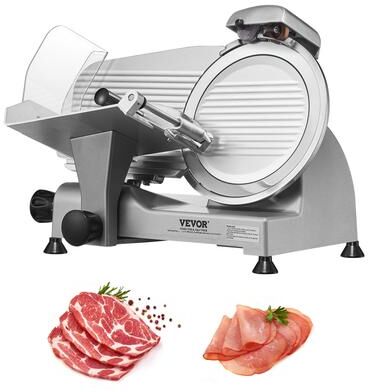

Similar search terms for VEVOR-Commercial-Meat-Slicer
Top-Angebote
Products related to VEVOR-Commercial-Meat-Slicer:
-
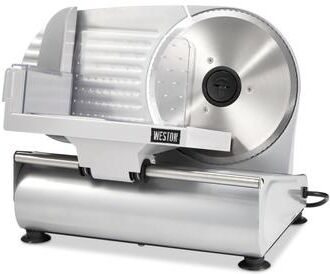
"Weston 7.5"" Meat Slicer with Serrated Blade""Slicing your favorite foods just got easier thanks to the Weston® 7.5"" Meat Slicer. It has a large serrated blade to efficiently slice a variety of foods including frozen, thawed and cooked meats, cheeses, breads, vegetables and fruits."105,99 $*Shipping: 0,00 $Secure redirect to the provider
-
Global G-29 18cm Blade Meat/Fish Slicer KnifeBlade Length: 18cm Global G Series Knives - The G Series is a classic collection of large Global knives Manufactured by Yoshikin in Niigata, Japan, using exclusive CROMOVA 18 high carbon stainless steel Superior razor sharp edge ground steeply to a point on an acute angle holding a sharper edge for longer Precisely balanced hollow sand filled handle Smooth contours and seamless construction, eliminates food or dirt traps offering the ultimate safety and hygiene Excellent stain resistance and edge retention Knives are not for sale to persons under the age of 18. - all knives and bladed products are delivered by Age Verified Delivery (AVD). The carrier may request proof of age in order to deliver your parcel. If proof of age is not available, or the recipient is underage, the carrier will refuse to deliver.121,95 £*Shipping: 0,00 £Secure redirect to the provider
-
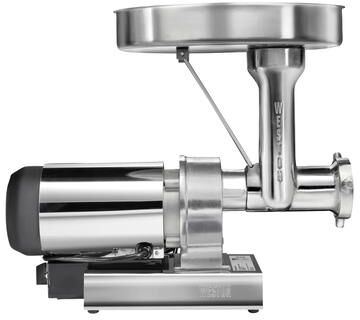
Weston Butcher Series #5 Commercial Meat Grinder - .35 HPGrind your harvest as fast as you can feed it into the Butcher Series™ #5 Commercial Meat Grinder. Grind farm raised and field fresh meats into burgers, meatloaf, sausage, jerky and more!199,99 $*Shipping: 0,00 $Secure redirect to the provider


-
How important is the transition of agriculture to a 50% reduced meat production to you?
The transition of agriculture to a 50% reduced meat production is very important to me. It is crucial for addressing environmental issues such as deforestation, water pollution, and greenhouse gas emissions associated with livestock farming. Additionally, reducing meat production can help improve animal welfare and promote a more sustainable food system. Overall, this transition is essential for creating a healthier planet for current and future generations. **
-
Did raw meat taste good to humans or chimpanzees back in the early Stone Age?
It is likely that both humans and chimpanzees found raw meat to be palatable in the early Stone Age. Our early ancestors likely had a preference for the taste of raw meat, as it provided essential nutrients and energy for survival. Similarly, chimpanzees, who are omnivorous and also consume raw meat in the wild, may have found it to be a satisfying and desirable food source. The taste for raw meat may have been an evolutionary adaptation that helped both humans and chimpanzees thrive in their respective environments. **
-
What are the reasons for a lower meat production and should agriculture in Germany consider changing its practices?
There are several reasons for lower meat production in Germany, including increasing consumer awareness about the environmental impact of meat consumption, concerns about animal welfare, and the rise of plant-based diets. Agriculture in Germany should consider changing its practices to address these issues by promoting sustainable farming methods, reducing reliance on intensive livestock farming, and diversifying production to include more plant-based alternatives. By adapting to changing consumer preferences and prioritizing ethical and environmentally friendly practices, German agriculture can contribute to a more sustainable and resilient food system. **
-
What are the reasons for a lower meat production and should agriculture in Germany switch to a different approach?
There are several reasons for a lower meat production in Germany, including increasing consumer awareness about the environmental impact of meat consumption, concerns about animal welfare, and the rise of plant-based diets. Agriculture in Germany could consider switching to a more sustainable approach by promoting plant-based agriculture, agroecology, and regenerative farming practices. This shift could help reduce greenhouse gas emissions, protect biodiversity, and improve the overall sustainability of the food system. **


What are the reasons for a lower meat production and should agriculture in Germany switch to a different model?
There are several reasons for a lower meat production in Germany, including increasing consumer awareness about the environmental impact of meat consumption, concerns about animal welfare, and the rising popularity of plant-based diets. Switching to a different agricultural model that focuses on sustainable and ethical practices could help address these concerns and align with changing consumer preferences. This could involve promoting more plant-based agriculture, implementing stricter animal welfare standards, and reducing the use of antibiotics and hormones in livestock farming. By transitioning to a more sustainable agricultural model, Germany could not only meet the demands of a changing market but also contribute to environmental conservation and animal welfare. **
What are the reasons for a decrease in meat production and should agriculture in Germany consider changing its practices?
There are several reasons for a decrease in meat production in Germany, including changing consumer preferences towards plant-based diets, concerns about animal welfare, and environmental impacts of meat production. Agriculture in Germany should consider changing its practices to align with these shifting consumer preferences and address sustainability concerns. This could involve promoting more sustainable farming practices, reducing reliance on intensive animal farming, and diversifying agricultural production to include more plant-based options. By adapting to these changes, German agriculture can better meet the demands of consumers and contribute to a more sustainable food system. **
Top-Angebote
Products related to VEVOR-Commercial-Meat-Slicer:
-
"Weston 7.5"" Meat Slicer with Serrated Blade""Slicing your favorite foods just got easier thanks to the Weston® 7.5"" Meat Slicer. It has a large serrated blade to efficiently slice a variety of foods including frozen, thawed and cooked meats, cheeses, breads, vegetables and fruits."105,99 $*Shipping: 0,00 $Secure redirect to the provider
-
Global G-29 18cm Blade Meat/Fish Slicer KnifeBlade Length: 18cm Global G Series Knives - The G Series is a classic collection of large Global knives Manufactured by Yoshikin in Niigata, Japan, using exclusive CROMOVA 18 high carbon stainless steel Superior razor sharp edge ground steeply to a point on an acute angle holding a sharper edge for longer Precisely balanced hollow sand filled handle Smooth contours and seamless construction, eliminates food or dirt traps offering the ultimate safety and hygiene Excellent stain resistance and edge retention Knives are not for sale to persons under the age of 18. - all knives and bladed products are delivered by Age Verified Delivery (AVD). The carrier may request proof of age in order to deliver your parcel. If proof of age is not available, or the recipient is underage, the carrier will refuse to deliver.121,95 £*Shipping: 0,00 £Secure redirect to the provider
-
How much chicken breast meat is mentioned in the McDonald's commercial?
The McDonald's commercial does not mention a specific amount of chicken breast meat. The commercial focuses on the quality and taste of the chicken breast meat used in their sandwiches, but it does not provide a specific quantity. Instead, it emphasizes the juicy and tender nature of the chicken breast meat used in their products. **
-
Why do so many vegetarians condemn us meat eaters, even though humans have been eating meat since the Stone Age?
Many vegetarians condemn meat eaters because they believe that consuming meat is unethical and harmful to the environment. They argue that modern meat production involves cruelty to animals and contributes to deforestation, greenhouse gas emissions, and other environmental issues. Additionally, some vegetarians believe that a plant-based diet is healthier and more sustainable. While humans have been eating meat for a long time, the ethical and environmental concerns surrounding meat consumption have led to increased criticism from some vegetarians. **
-
How important is the transition of agriculture to a 50% reduced meat production to you?
The transition of agriculture to a 50% reduced meat production is very important to me. It is crucial for addressing environmental issues such as deforestation, water pollution, and greenhouse gas emissions associated with livestock farming. Additionally, reducing meat production can help improve animal welfare and promote a more sustainable food system. Overall, this transition is essential for creating a healthier planet for current and future generations. **
-
Did raw meat taste good to humans or chimpanzees back in the early Stone Age?
It is likely that both humans and chimpanzees found raw meat to be palatable in the early Stone Age. Our early ancestors likely had a preference for the taste of raw meat, as it provided essential nutrients and energy for survival. Similarly, chimpanzees, who are omnivorous and also consume raw meat in the wild, may have found it to be a satisfying and desirable food source. The taste for raw meat may have been an evolutionary adaptation that helped both humans and chimpanzees thrive in their respective environments. **
Similar search terms for VEVOR-Commercial-Meat-Slicer
-
Weston Butcher Series #5 Commercial Meat Grinder - .35 HPGrind your harvest as fast as you can feed it into the Butcher Series™ #5 Commercial Meat Grinder. Grind farm raised and field fresh meats into burgers, meatloaf, sausage, jerky and more!199,99 $*Shipping: 0,00 $Secure redirect to the provider
-
Garvee Automatic Frozen Meat Slicer 10 or 12 In Blade 0 to 0.63 InAutomatic frozen meat slicer with a 10 inch blade or a 12 inch blade. The 10 inch model uses a blade about 9.84 inches across, and the 12 inch model uses a blade about 11.81 inches across.1199,99 $*Shipping: 0,00 $Secure redirect to the provider
-
What are the reasons for a lower meat production and should agriculture in Germany consider changing its practices?
There are several reasons for lower meat production in Germany, including increasing consumer awareness about the environmental impact of meat consumption, concerns about animal welfare, and the rise of plant-based diets. Agriculture in Germany should consider changing its practices to address these issues by promoting sustainable farming methods, reducing reliance on intensive livestock farming, and diversifying production to include more plant-based alternatives. By adapting to changing consumer preferences and prioritizing ethical and environmentally friendly practices, German agriculture can contribute to a more sustainable and resilient food system. **
-
What are the reasons for a lower meat production and should agriculture in Germany switch to a different approach?
There are several reasons for a lower meat production in Germany, including increasing consumer awareness about the environmental impact of meat consumption, concerns about animal welfare, and the rise of plant-based diets. Agriculture in Germany could consider switching to a more sustainable approach by promoting plant-based agriculture, agroecology, and regenerative farming practices. This shift could help reduce greenhouse gas emissions, protect biodiversity, and improve the overall sustainability of the food system. **
-
What are the reasons for a lower meat production and should agriculture in Germany switch to a different model?
There are several reasons for a lower meat production in Germany, including increasing consumer awareness about the environmental impact of meat consumption, concerns about animal welfare, and the rising popularity of plant-based diets. Switching to a different agricultural model that focuses on sustainable and ethical practices could help address these concerns and align with changing consumer preferences. This could involve promoting more plant-based agriculture, implementing stricter animal welfare standards, and reducing the use of antibiotics and hormones in livestock farming. By transitioning to a more sustainable agricultural model, Germany could not only meet the demands of a changing market but also contribute to environmental conservation and animal welfare. **
-
What are the reasons for a decrease in meat production and should agriculture in Germany consider changing its practices?
There are several reasons for a decrease in meat production in Germany, including changing consumer preferences towards plant-based diets, concerns about animal welfare, and environmental impacts of meat production. Agriculture in Germany should consider changing its practices to align with these shifting consumer preferences and address sustainability concerns. This could involve promoting more sustainable farming practices, reducing reliance on intensive animal farming, and diversifying agricultural production to include more plant-based options. By adapting to these changes, German agriculture can better meet the demands of consumers and contribute to a more sustainable food system. **
* All prices are inclusive of VAT and, if applicable, plus shipping costs. The offer information is based on the details provided by the respective shop and is updated through automated processes. Real-time updates do not occur, so deviations can occur in individual cases. ** Note: Parts of this content were created by AI.